Logo LAOMS Laboratorio de Análisis de Organizaciones y Movimientos Sociales
  • Inicio
  • ¿Quiénes somos?
    • Directorio
    • Miembros
      • Estudiantes
      • Académicos
    • Ubicación
  • Investigación y Docencia
    • Derechos humanos y protestas
      • Defender es un derecho
    • Características y trayectorias de los eventos de protesta en México
    • Evaluación del desempeño asociativo
      • Presentación
      • Publicaciones
    • Sociedad civil
    • Programas de estudio
    • Publicaciones
    • Infografías
    • Conferencias
    • Cortos de investigación
    • Eventos
      • Archivo de eventos
  • Léxico de la Protesta
  • Red
  • Servicio Social
  • Difusión
    • Publicaciones
      • De miembros del LAOMS
      • Descargables
      • Recomendadas
      • Colección Charles Tilly
    • Calendarios de efemérides
    • Recomendaciones fílmicas
    • Revistas
    • Eventos
    • Convocatorias
    • Cursos y seminarios
    • Comunicados
    • Enlaces
  • Fototeca
  • Blogs
  • Movimientos e instituciones
  • Observatorio de la Democracia
  • Incidencia Pública
  • Seminario México
Convocatorias

2017 AAA Panel: The Beginnings and the Ends of Revolution

Por Roberto Holguín Carrillo / 16 febrero, 2017

CfP: 2017 American Anthropological Association (Washington DC, 29/11-03/12)
Panel: The Beginnings and the Ends of Revolution: The Legacy of the October Revolution and Emancipatory Action

Organizers:
Mariya Ivancheva (University of Leeds)
Saygun Gökarıksel (Bogazici University)

Discussant: Don Kalb (Central European University/Utrecht University)

Revolution is a Janus-faced concept that “evokes dialectically linked oppositions: light and darkness; rupture and continuity; liberation and oppression; hope and disillusion” (Mayer 2000). Revolution refers to “breaking the chains that bind the future” in the sense Marx spoke of it (Balibar 2003). If revolutions are also political events that forcefully pose the problem of beginning, how may we think about the end/s of the revolution (if there is an end)? What oppositions, apporias, or contradictions do those ends pose? How might anthropology contribute to the study of the beginnings and ends of the revolution, and what would be the value of that study at our current political conjuncture?

This panel aims to explore from an anthropological perspective the symbolic, epistemic, sociopolitical space opened up by the event or process of the October Revolution, the dissemination of its ideologies and practices to different socialist, liberal, and (post)colonial regimes, as well as its various ends across the world. In that, we would like to explore from situated points of views, especially in the “peripheries” of ‘actually existing’ socialism and revolutionary processes:

— the collective idea, imaginary, and desire of revolution (and communism) with its temporality and emancipatory visions and motivations, as well as the ideas and premonitions of its betrayal and death

— the policies/ practices/ political projects of different scales of social engineering and development and their (often hybrid) adoption or adaptation in diverse contexts

— the links between really existing socialist countries and the non-aligned world that followed the collapse of state socialism (especially in the former Socialist bloc and Yugoslavia), and their repercussions across the world; and the legacies of the Revolution for contemporary social movements and political action, but also as a source of legitimacy or rallying point for the recent nationalist and right-wing populist movements.

Through historical inquiry and ethnographic work, the papers will explore the extent to which the October Revolution and its real experience (its ideas, practices, and institutions), has been and continues to be not just a temporarily and spatially isolated event, but a global experience. This approach will also allow us to discuss the difficult, yet crucial nexus between really existing socialism and the developments we experience in our present reality in 2017: the uncoupling of identity politics and class politics; the rise of nationalism, right-wing populism; the crises of liberal democracy and neoliberal capitalism; and the impasse of technocratic neoliberal governance.

If interested, please send your abstract (max 250 words) by 5 March 2017 to Mariya Ivancheva m.ivancheva@leeds.ac.uk and Saygun Gökarıksel saygun.gokariksel@boun.edu.tr
Siguiente ➝
A la sombra de Sidney Tarrow: Conceptos básicos para el estudio de los movimientos de protesta

Te puede interesar

La UNAM será sede del congreso de estudios latinoamericanos más grande del mundo

Por Karina González / mayo 30, 2026

Coloquio conjunto del IIS y el CEIICH

Por Karina González / abril 27, 2026

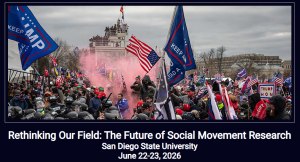
Repensando nuestro campo: El futuro de la investigación sobre movimientos sociales

Por Karina González / abril 21, 2026

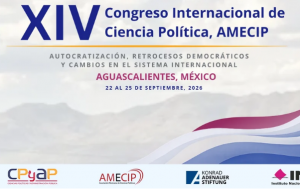
XIV Congreso Internacional de Ciencia Política

Por Karina González / mayo 8, 2026

Deja una respuesta Cancelar la respuesta

Tu dirección de correo electrónico no será publicada. Los campos obligatorios están marcados con *

    Categorías

    • Acervo fotográfico
    • Archivo
    • Calendarios
    • Colección Charles Tilly
    • Comunicados
    • Conferencias LAOMS
    • Convocatorias
    • Cortos de investigación
    • Cursos y seminarios
    • De miembros del LAOMS
    • Derechos humanos y protestas
    • Descargables
    • Efemérides
    • Eventos
    • Eventos de protesta
    • Eventos externos
    • Eventos internos
    • Infografías
    • Léxico de la Protesta
    • Programas de estudio
    • Publicaciones
    • Publicaciones Café de Altura
    • Recomendaciones fílmicas
    • Recomendadas
    • REDA

    Nube de etiquetas

    acción colectiva activismo político activistas América Latina cambio climático Chile ciencia política ciencias sociales convocatoria cortos de investigación covid-19 cultura democracia derechos humanos descargables documental economía economía política emociones Estados Unidos de América eventos gobernanza género historia investigacion justicia medio ambiente memoria mexico movimiento estudiantil movimientos estudiantiles movimiento social movimientos sociales pandemia política protestas protesta social Protest Movements representación política represión resistencias Social Movements sociedad civil sociología violencia
Logo LAOMS

Suscríbete a nuestro boletín

Nosotros

  • Inicio
  • Quiénes somos
  • Proyectos

Accesos directos

  • Publicaciones
  • Blogs
  • Léxico de la protesta
  • Eventos

Contacto

Centro de Investigaciones Interdisciplinarias en Ciencias y Humanidades (CEIICH)
UNAM
Torre II de Humanidades, 6to piso
Ciudad Universitaria, 04510, CDMX

laoms.ceiich@gmail.com

© 2026
Laboratorio de Análisis de Organizaciones y Movimientos Sociales

We ♥ Wordpress | Diseño por rholguinc