Logo LAOMS Laboratorio de Análisis de Organizaciones y Movimientos Sociales
  • Inicio
  • ¿Quiénes somos?
    • Directorio
    • Miembros
      • Estudiantes
      • Académicos
    • Ubicación
  • Investigación y Docencia
    • Derechos humanos y protestas
      • Defender es un derecho
    • Características y trayectorias de los eventos de protesta en México
    • Evaluación del desempeño asociativo
      • Presentación
      • Publicaciones
    • Sociedad civil
    • Programas de estudio
    • Publicaciones
    • Infografías
    • Conferencias
    • Cortos de investigación
    • Eventos
      • Archivo de eventos
  • Léxico de la Protesta
  • Red
  • Servicio Social
  • Difusión
    • Publicaciones
      • De miembros del LAOMS
      • Descargables
      • Recomendadas
      • Colección Charles Tilly
    • Calendarios de efemérides
    • Recomendaciones fílmicas
    • Revistas
    • Eventos
    • Convocatorias
    • Cursos y seminarios
    • Comunicados
    • Enlaces
  • Fototeca
  • Blogs
  • Movimientos e instituciones
  • Observatorio de la Democracia
  • Incidencia Pública
  • Seminario México
Convocatorias

Interface Call for papers volume 11

Por Laura Gutiérrez / 4 febrero, 2019

Call for papers volume 11 issue 2 (Nov-Dec 2019)
Understanding and challenging right-wing movements

 Lesley Wood, Heike Schaumberg, Sara C. Motta, Laurence Cox and Irina Ceric

The November-December 2019 issue of the open-access, online, copy left academic/activist journal Interface: a Journal for and about Social Movements (http://www.interfacejournal.net/) will focus on the theme of understanding and challenging right-wing movements. Contributions on other themes, as always, are also welcome.

The Volume 11, issue 1 (May-June 2019) issue will be a general issue, open to all contributions relevant to the journal.

Principles for contributions

Interface is a journal of practitioner research, meaning that we welcome work by movement activists as well as activist scholars, and work in a variety of formats which suit these different kinds of writing as well as our very varied readership – which includes activists and researchers across the world, connected to many different movements and working within very different intellectual, theoretical and political traditions.

We are interested in pieces in many formats – peer-reviewed articles and interviews with movement activists, research and teaching notes, book reviews and key documents and other formats that work well for their purposes – that tackle some of the questions raised above.

All contributions (including those for the special issue and the special section) should go to the appropriate regional editors by the deadline of May 1, 2019. Please see the editorial contacts page (http://www.interfacejournal.net/submissions/editorial-contact/) – and use the appropriate template. Please see the guidelines for contributors (http://www.interfacejournal.net/submissions/guidelines-for-contributors/) for more indications on content and style.

General contributions

As always, this issue will also include non-theme related pieces. We are happy to consider submissions on any aspect of social movement research and practice that fit within the journal’s mission statement (http://www.interfacejournal.net/who-we-are/mission-statement/). Pieces for Interface should contribute to the journal’s mission as a tool to help our movements learn from each other’s struggles, by developing analyses from specific movement processes and experiences that can be translated into a form useful for other movements.

In this context, we welcome contributions by movement participants and academics who are developing movement-relevant theory and research. In addition to studies of contemporary experiences and practices, we encourage analysis of historical social movements as a means of learning from the past and better understanding contemporary struggles.

Our goal is to include material that can be used in a range of ways by  movements — in terms of its content, its language, its purpose and its form. We thus seek work in a range of different formats, such as conventional (refereed) articles, review essays, facilitated discussions and interviews, action notes, teaching notes, key documents and analysis, book reviews — and beyond. Both activist and academic peers review research contributions, and other material is sympathetically edited by peers. The editorial process generally is geared towards assisting authors to find ways of expressing their understanding, so that we all can be heard across geographical, social and political distances.

We can accept material in Bengali, Bosnian/Croatian/Serbian, Czech, Danish, Dutch, English, Finnish, French, German, Hindi, Italian, Mandarin Chinese, Norwegian, Polish, Portuguese, Russian, Slovak, Spanish and Swedish. Please see our editorial contacts page (http://www.interfacejournal.net/submissions/editorial-contact/) for details of who to send submissions to.

Deadline and contact details

The deadline for initial submissions to this issue, to be published in late 2019, is 1 May 2019. For details of how to submit pieces to Interface, please see the “Guidelines for contributors” on our website. All manuscripts should be sent to the appropriate regional editor, listed on our contacts page.

Submission templates are available online via the guidelines page (http://www.interfacejournal.net/submissions/guidelines-for-contributors/) and should be used to ensure correct formatting. Interface is a completely voluntary effort, without the resources of commercial journals, so we have to do all the layout and typesetting ourselves. The only way we can manage this is to ask authors to use these templates when preparing submissions. Thanks!


Descargar documento

Descargar

Siguiente ➝
Interface volume 10 issues 1 & 2

Te puede interesar

Conferencia mundial sobre justicia ambiental 2026

Por Karina González / abril 7, 2026

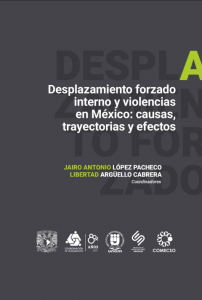
Desplazamiento forzado interno y violencias en México. Causas, trayectorias y efectos

Por Karina González / abril 15, 2026

Utopía de Esteban Krotz

Por Karina González / mayo 11, 2026

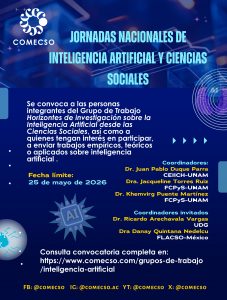
Jornadas nacionales de inteligencia artificial y ciencias sociales

Por Karina González / abril 21, 2026

Deja un comentario Cancelar respuesta

Tu dirección de correo electrónico no será publicada. Los campos obligatorios están marcados con *

    Entradas recientes

    • La UNAM será sede del congreso de estudios latinoamericanos más grande del mundo

      La UNAM será sede del congreso de estudios latinoamericanos más grande del mundo

      30 mayo, 2026
    • Panel: ¿Cómo afecta la violencia armada a los Niños, Niñas y Adolescentes?

      Panel: ¿Cómo afecta la violencia armada a los Niños, Niñas y Adolescentes?

      30 mayo, 2026
    • Movimientos sociales en México. Siglos XIX y XX

      Movimientos sociales en México. Siglos XIX y XX

      18 mayo, 2026
    • Informe académico sobre la reforma judicial de 2024 en México

      Informe académico sobre la reforma judicial de 2024 en México

      13 mayo, 2026
    • Redefinición de Derechos y Movilización legal en Tiempos de Polarización Política

      Redefinición de Derechos y Movilización legal en Tiempos de Polarización Política

      12 mayo, 2026
    • Utopía de Esteban Krotz

      Utopía de Esteban Krotz

      11 mayo, 2026
    • Los desafíos de la erosión y la resiliencia democrática

      Los desafíos de la erosión y la resiliencia democrática

      8 mayo, 2026
    • XIV Congreso Internacional de Ciencia Política

      XIV Congreso Internacional de Ciencia Política

      8 mayo, 2026
    • Coloquio conjunto del IIS y el CEIICH

      Coloquio conjunto del IIS y el CEIICH

      27 abril, 2026
    • Repensando nuestro campo: El futuro de la investigación sobre movimientos sociales

      Repensando nuestro campo: El futuro de la investigación sobre movimientos sociales

      21 abril, 2026

    Categorías

    • Acervo fotográfico
    • Archivo
    • Calendarios
    • Colección Charles Tilly
    • Comunicados
    • Conferencias LAOMS
    • Convocatorias
    • Cortos de investigación
    • Cursos y seminarios
    • De miembros del LAOMS
    • Derechos humanos y protestas
    • Descargables
    • Efemérides
    • Eventos
    • Eventos de protesta
    • Eventos externos
    • Eventos internos
    • Infografías
    • Léxico de la Protesta
    • Programas de estudio
    • Publicaciones
    • Publicaciones Café de Altura
    • Recomendaciones fílmicas
    • Recomendadas
    • REDA

    Nube de etiquetas

    acción colectiva activismo político activistas América Latina cambio climático Chile ciencia política ciencias sociales convocatoria cortos de investigación covid-19 cultura democracia derechos humanos descargables documental economía economía política emociones Estados Unidos de América eventos gobernanza género historia investigacion justicia medio ambiente memoria mexico movimiento estudiantil movimientos estudiantiles movimiento social movimientos sociales pandemia política protestas protesta social Protest Movements representación política represión resistencias Social Movements sociedad civil sociología violencia
Logo LAOMS

Suscríbete a nuestro boletín

Nosotros

  • Inicio
  • Quiénes somos
  • Proyectos

Accesos directos

  • Publicaciones
  • Blogs
  • Léxico de la protesta
  • Eventos

Contacto

Centro de Investigaciones Interdisciplinarias en Ciencias y Humanidades (CEIICH)
UNAM
Torre II de Humanidades, 6to piso
Ciudad Universitaria, 04510, CDMX

laoms.ceiich@gmail.com

© 2026
Laboratorio de Análisis de Organizaciones y Movimientos Sociales

We ♥ Wordpress | Diseño por rholguinc