Logo LAOMS Laboratorio de Análisis de Organizaciones y Movimientos Sociales
  • Inicio
  • ¿Quiénes somos?
    • Directorio
    • Miembros
      • Estudiantes
      • Académicos
    • Ubicación
  • Investigación y Docencia
    • Derechos humanos y protestas
      • Defender es un derecho
    • Características y trayectorias de los eventos de protesta en México
    • Evaluación del desempeño asociativo
      • Presentación
      • Publicaciones
    • Sociedad civil
    • Programas de estudio
    • Publicaciones
    • Infografías
    • Conferencias
    • Cortos de investigación
    • Eventos
      • Archivo de eventos
  • Léxico de la Protesta
  • Red
  • Servicio Social
  • Difusión
    • Publicaciones
      • De miembros del LAOMS
      • Descargables
      • Recomendadas
      • Colección Charles Tilly
    • Calendarios de efemérides
    • Recomendaciones fílmicas
    • Revistas
    • Eventos
    • Convocatorias
    • Cursos y seminarios
    • Comunicados
    • Enlaces
  • Fototeca
  • Blogs
  • Movimientos e instituciones
  • Observatorio de la Democracia
  • Incidencia Pública
  • Seminario México
Convocatorias

Borders, Democracy and Security

Por Laura Gutiérrez / 8 diciembre, 2020

BEYOND BORDERS supports research about borders and boundaries in past and present times. It promotes interdisciplinary exchange in social sciences and humanities. The Call for Applications 2020 is open till January 15, 2021, and focuses “Borders, Democracy and Security”.

About

Borders are an integral part of our everyday life. Political, social, virtual, intellectual and cultural borders are hotly contested, both in international contexts around issues of migration, security, trade, or global education and within nations trying to deal with increased diversity and changing notions of national culture and history. Geographical borders separate states, regions and cities. They mark the breadth and depth of territorial organization while informal symbolic and social boundaries define values and norms for social, cultural, and religious life. All types of borders can be conceived as social constructs: They may refer to cultural and historical backgrounds, result from international treaties or political negotiations or reflect public debates on controversial topics.

In our increasingly globalized world in which human mobility and the constant circulation of goods, objects, ideas and practices are also an integral part of everyday life, the importance of border making and crossing is growing. Borders and cross-border regions function therefore as manifestations of social, political, economic and cultural change.

Focus 2020
Borders, Democracy and Security

The unprecedented travel bans and closures of national borders during this time of COVID-19 make borders more visible than ever before. However, the ad-hoc restrictions introduced in spring 2020 were selective: Citizens, permanent residents, migrant workers judged “essential” for health care, social welfare and public services could still enter “sealed” national territories. Other travelers such as temporary residents, visitors, circular migrant workers or refugees were excluded. The numerous images of extensive controls and closed doors, and at the same time, new forms of cross-border political, economic, cultural life that emerged in response, made clear how regionally and globally interdependent we have become.

How does globalization influence the dismantling and the resurrection of borders worldwide, be they political, economic, cultural or intellectual? Which borders and boundaries are shifting and why? What kinds of new pathways of connections and cooperation are emerging in response? What kinds of historical processes have led to the transformation of borders and border regimes? How do these challenge longstanding power hierarchies? To what extent might cultural revolutions transform or pull apart borders and boundaries? Can democracy function beyond national borders? How are the relationships between citizens and state changing with respect to rights and social protection, and how does that differ in different regions of the world?

Questions concerning borders, state transformation, democracy, social welfare, and security are the focus of the current call for applications for Ph.D. scholarships. We encourage applications for projects concentrating on following aspects, although other topics will also be considered:

  •  the conceptual construction of borders,
  •  the changing nature and functionality of national borders and its effect on regionalization,
  •  materiality and symbolism of borders,
  •  transformation of border and regional regimes,
  •  supra- and sub-national integration,
  •  citizenship and belonging,
  •  security and securitization,
  •  transnational social protection,
  •  cultural borders and their manifestation in arts and cultural production.

We invite applications from Ph.D. students worldwide studying borders and bordering phenomena in different regions of the world. Both empirical research based on extensive fieldwork and projects centered on theoretical reflection are eligible for support. Innovative and challenging research questions as well as comparative approaches are highly welcome.

Further information about the programme and application requirements can be found under https://beyondborders.zeit-stiftung.de.

Siguiente ➝
Las protestas y los movimientos sociales en el contexto de la pandemia

Te puede interesar

Pablo González Casanova. El colonialismo interno. Origen, desarrollo y vigencia de un concepto

Por Karina González / abril 19, 2026

Panel: ¿Cómo afecta la violencia armada a los Niños, Niñas y Adolescentes?

Por Karina González / mayo 30, 2026

XIII Congreso Nacional de Derecho Constitucional

Por Karina González / abril 19, 2026

Movimientos sociales en México. Siglos XIX y XX

Por Karina González / mayo 18, 2026

Deja una respuesta Cancelar la respuesta

Tu dirección de correo electrónico no será publicada. Los campos obligatorios están marcados con *

Últimas entradas

Concurso de Video “Descubramos a las Científicas” 2026

26 junio, 2026
Leer más →

Climate Change and Civic Engagement

26 junio, 2026
Leer más →

Curso. Liderazgo académico y habilidades de dirección en educación superior

26 junio, 2026
Leer más →

Activando el cambio generacional: Gestión e Incidencia en las OSC

16 junio, 2026
Leer más →

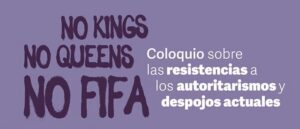
Coloquio sobre las resistencias a los autoritarismos y despojos actuales

8 junio, 2026
Leer más →

La UNAM será sede del congreso de estudios latinoamericanos más grande del mundo

30 mayo, 2026
Leer más →

Panel: ¿Cómo afecta la violencia armada a los Niños, Niñas y Adolescentes?

30 mayo, 2026
Leer más →

Movimientos sociales en México. Siglos XIX y XX

18 mayo, 2026
Leer más →

Informe académico sobre la reforma judicial de 2024 en México

13 mayo, 2026
Leer más →

Redefinición de Derechos y Movilización legal en Tiempos de Polarización Política

12 mayo, 2026
Leer más →

Categorías

  • Acervo fotográfico (4)
  • Comunicados (10)
  • Convocatorias (309)
  • Cursos y seminarios (45)
  • Efemérides (85)
    • Calendarios (12)
  • Eventos (297)
    • Archivo (9)
    • Eventos externos (227)
    • Eventos internos (50)
      • Conferencias LAOMS (7)
      • Cortos de investigación (28)
  • Eventos de protesta (34)
    • Derechos humanos y protestas (26)
  • Infografías (20)
  • Léxico de la Protesta (1)
  • Programas de estudio (1)
  • Publicaciones (265)
    • Colección Charles Tilly (2)
    • De miembros del LAOMS (25)
    • Descargables (160)
    • Publicaciones Café de Altura (7)
    • Recomendadas (247)
  • Recomendaciones fílmicas (69)
  • REDA (6)

Nube de etiquetas

acción colectiva activismo político activistas América Latina cambio climático Chile ciencia política ciencias sociales convocatoria cortos de investigación covid-19 cultura democracia derechos humanos descargables documental economía economía política emociones Estados Unidos de América eventos gobernanza género historia investigacion justicia medio ambiente memoria mexico movimiento estudiantil movimientos estudiantiles movimiento social movimientos sociales pandemia política protestas protesta social Protest Movements representación política represión resistencias Social Movements sociedad civil sociología violencia
Logo LAOMS

Suscríbete a nuestro boletín

Nosotros

  • Inicio
  • Quiénes somos
  • Proyectos

Accesos directos

  • Publicaciones
  • Blogs
  • Léxico de la protesta
  • Eventos

Contacto

Centro de Investigaciones Interdisciplinarias en Ciencias y Humanidades (CEIICH)
UNAM
Torre II de Humanidades, 6to piso
Ciudad Universitaria, 04510, CDMX

laoms.ceiich@gmail.com

© 2026
Laboratorio de Análisis de Organizaciones y Movimientos Sociales

We ♥ Wordpress | Diseño por rholguinc