Logo LAOMS Laboratorio de Análisis de Organizaciones y Movimientos Sociales
  • Inicio
  • ¿Quiénes somos?
    • Directorio
    • Miembros
      • Estudiantes
      • Académicos
    • Ubicación
  • Investigación y Docencia
    • Derechos humanos y protestas
      • Defender es un derecho
    • Características y trayectorias de los eventos de protesta en México
    • Evaluación del desempeño asociativo
      • Presentación
      • Publicaciones
    • Sociedad civil
    • Programas de estudio
    • Publicaciones
    • Infografías
    • Conferencias
    • Cortos de investigación
    • Eventos
      • Archivo de eventos
  • Léxico de la Protesta
  • Red
  • Servicio Social
  • Difusión
    • Publicaciones
      • De miembros del LAOMS
      • Descargables
      • Recomendadas
      • Colección Charles Tilly
    • Calendarios de efemérides
    • Recomendaciones fílmicas
    • Revistas
    • Eventos
    • Convocatorias
    • Cursos y seminarios
    • Comunicados
    • Enlaces
  • Fototeca
  • Sesión
  • Blogs
  • Movimientos e instituciones
  • Observatorio de la Democracia
  • Incidencia Pública
Convocatorias

Understanding Noncompliance with COVID-19 Containment Measures

Por Laura Gutiérrez / 3 marzo, 2023

Understanding Noncompliance with COVID-19 Containment Measures:
Factors, Manifestations and Effects

About this Research Topic

Abstract Submission Deadline 31 March 2023
Manuscript Submission Deadline 31 July 2023

Guidelines>>

Since the beginning of the COVID-19 crisis in March 2020, one of the issues that have attracted significant attention within the academic community is individual compliance with containment measures. Indeed, the highly contagious nature of the virus and states’ inaptitude to enforce lockdowns for long periods, rendered citizens’ voluntary adherence to preventive policies crucial for slowing down the spread of the pandemic and reducing casualties. Then again, while the study of compliance with COVID-19 mitigation measures has seen a tremendous increase the last years, less is known about the factors, manifestations and effects of noncompliance. In fact, within the relevant literature, noncompliance with COVID-19 measures is often treated as merely the opposite of compliance, while noncompliers are regularly marginalised as a homogenous mass recognised interchangeably as sceptics, deniers or dissidents.

This Research Topic aims to fill this research lacuna by identifying the basic characteristics and the diverse forms that noncompliance with COVID-19 containment measures has taken, through the collection of a number of theoretical or empirical submissions on the factors, manifestations and effects of noncompliance through the use of quantitative, qualitative or mixed-methods designs. We would welcome contributions from representative and non-representative samples that come from either the general population or particular social groups. Furthermore, we would favour the inclusion of under-represented samples in the submitted manuscripts or the studies performed in countries, where social sciences are not well-represented.

Possible contributions cover issues that include (but are not limited to):

  • What are the main characteristics of noncompliance with COVID-19 containment measures?
  • What are the different types of noncompliers? How similar or different are they?
  • What are the political, social and/or psychological differences between sceptics, deniers or dissidents?
  • What are the political, social, psychological, cultural and/or structural factors that facilitate noncompliance with COVID-19 mitigation measures?
  • How are different kind of factors (e.g., political and psychological) interact to bring about noncompliance?
  • Does political ideology play a role in noncompliant behaviour?
  • What are the different forms that noncompliance takes?
  • What are the attitudes/behaviours that characterise anti-restriction individuals?
  • What is the sociopolitical and psychological profile of anti-COVID-19 protesters?
  • To what extent exposure to misinformation, fake news and conspiracy theories is linked with noncompliance?

Through these questions, we aim to understand the mechanisms that have facilitated noncompliance with COVID-19 containment measures. In doing this, this research proposal aspires to uncover the stimuli for political participation, from the purely normative and institutional forms to the most extreme forms of engagement in anti-restriction political actions. Therefore, we suggest that a comprehensive and thorough overview of theoretical and empirical findings and results of current ongoing research on noncompliance can shed light on the diverse manifestations of anti-restriction political participation.

This Research Topic welcomes the submission of research papers that describe original work that has not been submitted or is currently under review, has not been previously published nor accepted for publication in any other journal. We look forward to manuscripts that synthesize or creatively use different theories and methods to understand the factors, manifestations and effects of noncompliance with COVID-19 measures. We are also open to single case studies, comparisons of different countries, or theme-specific analyses. Empirical papers should clearly describe the research questions, hypotheses and their theoretical background. They should also describe the context, samples and study design (e.g., sample size, ages, demographic characteristics etc.). Finally, a clear description of measures should also be provided, accompanied by appropriate analyses. We strongly encourage authors to adhere to open science practices.

Frontiers in Political Science

Siguiente ➝
Memorias, Derechos Humanos y Democracia

Te puede interesar

Lecturas indispensables para comprender el cambio climático desde todas las ciencias

Por Karina González / septiembre 24, 2026

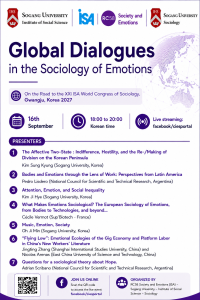
Diálogos globales en la sociología de las emociones

Por Karina González / septiembre 2, 2026

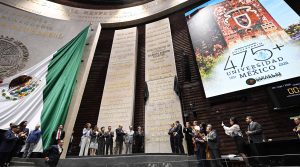
Inscriben con letras de oro en el Muro de Honor de la Cámara de Diputados la leyenda “475 años de la Universidad de México (1551-2026)”

Por Karina González / septiembre 30, 2026

Premio John D. McCarthy 2027

Por Karina González / septiembre 24, 2026

Deja una respuesta Cancelar la respuesta

Tu dirección de correo electrónico no será publicada. Los campos obligatorios están marcados con *

Últimas entradas

La economía de la Menopausia

8 octubre, 2026
Leer más →

Voces que gobiernan: las mujeres indígenas en el poder local

8 octubre, 2026
Leer más →

Inscriben con letras de oro en el Muro de Honor de la Cámara de Diputados la leyenda “475 años de la Universidad de México (1551-2026)”

30 septiembre, 2026
Leer más →

Jornadas Nacionales de Inteligencia Artificial y Ciencias Sociales

24 septiembre, 2026
Leer más →

Premio John D. McCarthy 2027

24 septiembre, 2026
Leer más →

Call for papers – Mobilization: An international quarterly

24 septiembre, 2026
Leer más →

El LAOMS felicita al Dr. Julio Vicente Juárez Gámiz

24 septiembre, 2026
Leer más →

“It is worse in the fields”: how racial capitalism disciplines Latino day laborers in California’s Central Valley

24 septiembre, 2026
Leer más →

Se crea la Cátedra Extraordinaria Cuauhtémoc Cárdenas Solórzano “Democracia y Elecciones”

24 septiembre, 2026
Leer más →

Tercera Cátedra Leonardo Morlino en el XIV Congreso Internacional de Ciencia Política de AMECIP

24 septiembre, 2026
Leer más →

Categorías

  • Acervo fotográfico (4)
  • Comunicados (15)
  • Convocatorias (317)
  • Cursos y seminarios (44)
  • Efemérides (85)
    • Calendarios (12)
  • Eventos (314)
    • Archivo (9)
    • Eventos externos (244)
    • Eventos internos (50)
      • Conferencias LAOMS (7)
      • Cortos de investigación (28)
  • Eventos de protesta (34)
    • Derechos humanos y protestas (26)
  • Infografías (20)
  • Léxico de la Protesta (1)
  • Programas de estudio (1)
  • Publicaciones (269)
    • Colección Charles Tilly (2)
    • De miembros del LAOMS (25)
    • Descargables (163)
    • Publicaciones Café de Altura (7)
    • Recomendadas (251)
  • Recomendaciones fílmicas (69)
  • REDA (7)

Nube de etiquetas

acción colectiva activismo político activistas América Latina cambio climático Chile ciencia política ciencias sociales convocatoria cortos de investigación covid-19 cultura democracia derechos humanos descargables documental economía economía política emociones Estados Unidos de América eventos gobernanza género historia investigacion justicia medio ambiente memoria mexico movimiento estudiantil movimientos estudiantiles movimiento social movimientos sociales pandemia política protestas protesta social Protest Movements representación política represión resistencias Social Movements sociedad civil sociología violencia
Logo LAOMS

Suscríbete a nuestro boletín

Nosotros

  • Inicio
  • Quiénes somos
  • Proyectos

Accesos directos

  • Publicaciones
  • Blogs
  • Léxico de la protesta
  • Eventos

Contacto

Centro de Investigaciones Interdisciplinarias en Ciencias y Humanidades (CEIICH)
UNAM
Torre II de Humanidades, 6to piso
Ciudad Universitaria, 04510, CDMX

laoms.ceiich@gmail.com

© 2026
Laboratorio de Análisis de Organizaciones y Movimientos Sociales

We ♥ Wordpress | Diseño por rholguinc